
The SEO Engine: an SEO content system built in Claude Code
A full SEO blog post used to take a full day by hand. Now it takes 15 to 20 minutes, from research to paste-ready CMS metadata.

A good SEO blog post isn't one job. It's several: picking a topic that hasn't been covered, researching it, outlining, writing, checking keywords, then preparing everything the CMS needs. Done by hand, one post took the team a full day.
Research comes first
Current stats and sources have to be found for each audience before a word gets written.
Topics are easy to repeat
Without a record of what's been published for each audience, ideas start to overlap.
SEO checks get rushed
Keyword placement in the title, the opening paragraph and the headings is easy to miss at the end of a long day.
One-shot AI drafts need rework
A single prompt gives a wall of text that someone still has to restructure and check.
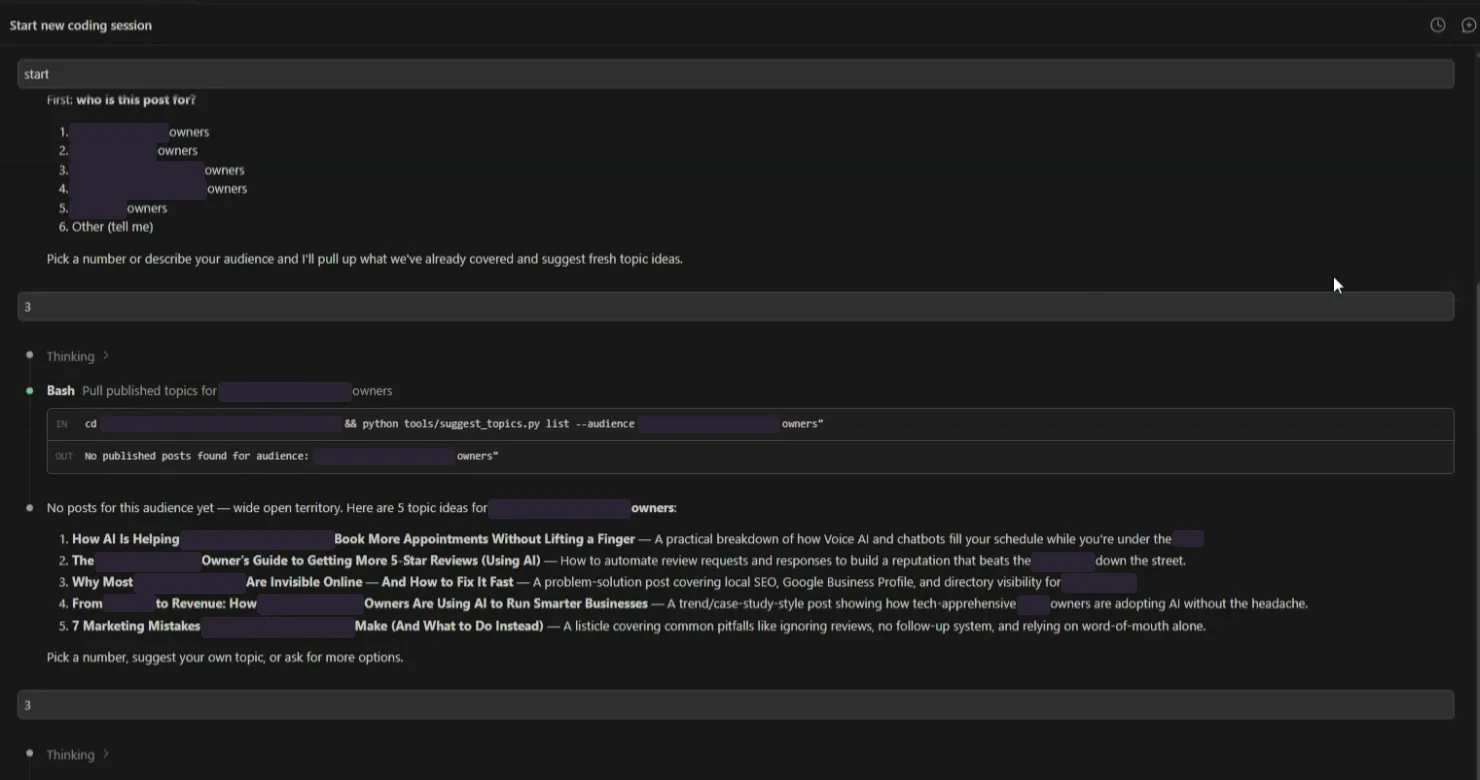
The SEO Engine runs inside VS Code with Claude Code. The team types "start" and answers two questions: who the post is for, and which topic.
- Topic memoryBefore suggesting ideas, it checks what's already been published for that audience, so suggestions stay fresh.
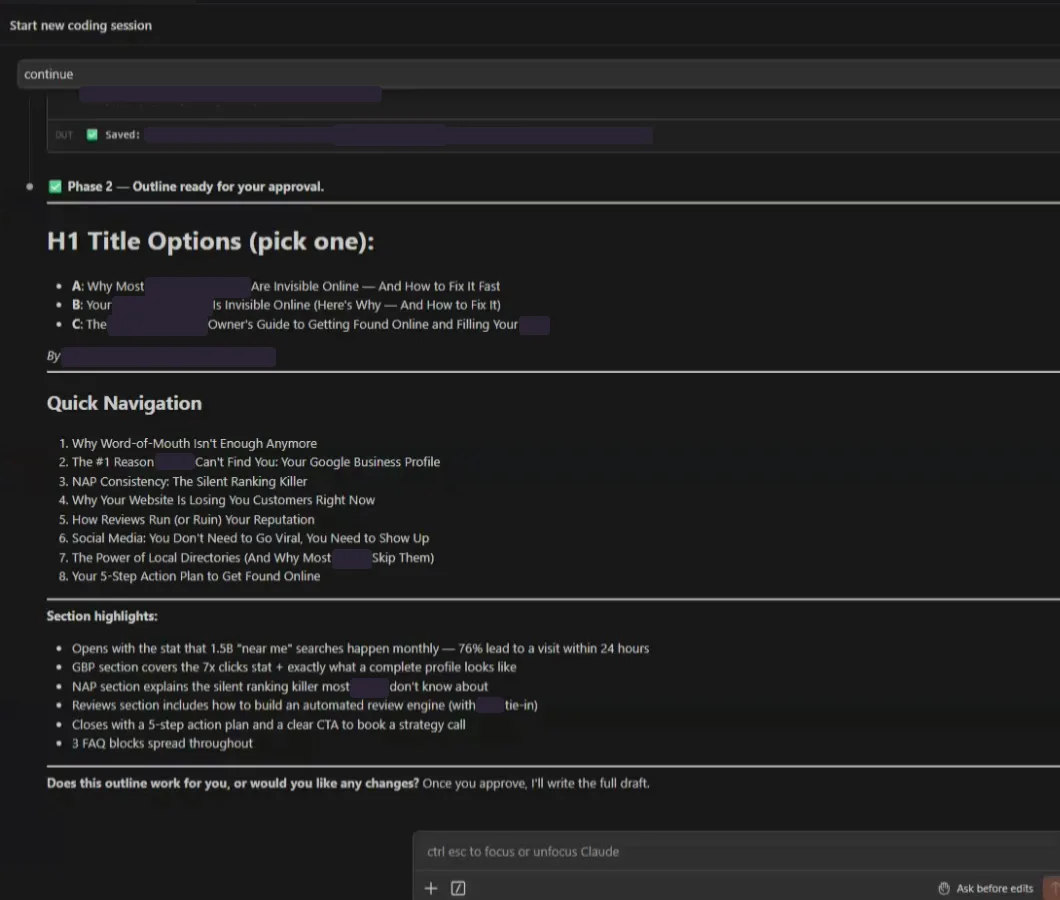
- A person approves the outlineAfter research, it stops and presents H1 title options, a section plan and highlights. Nothing gets drafted until someone says yes.
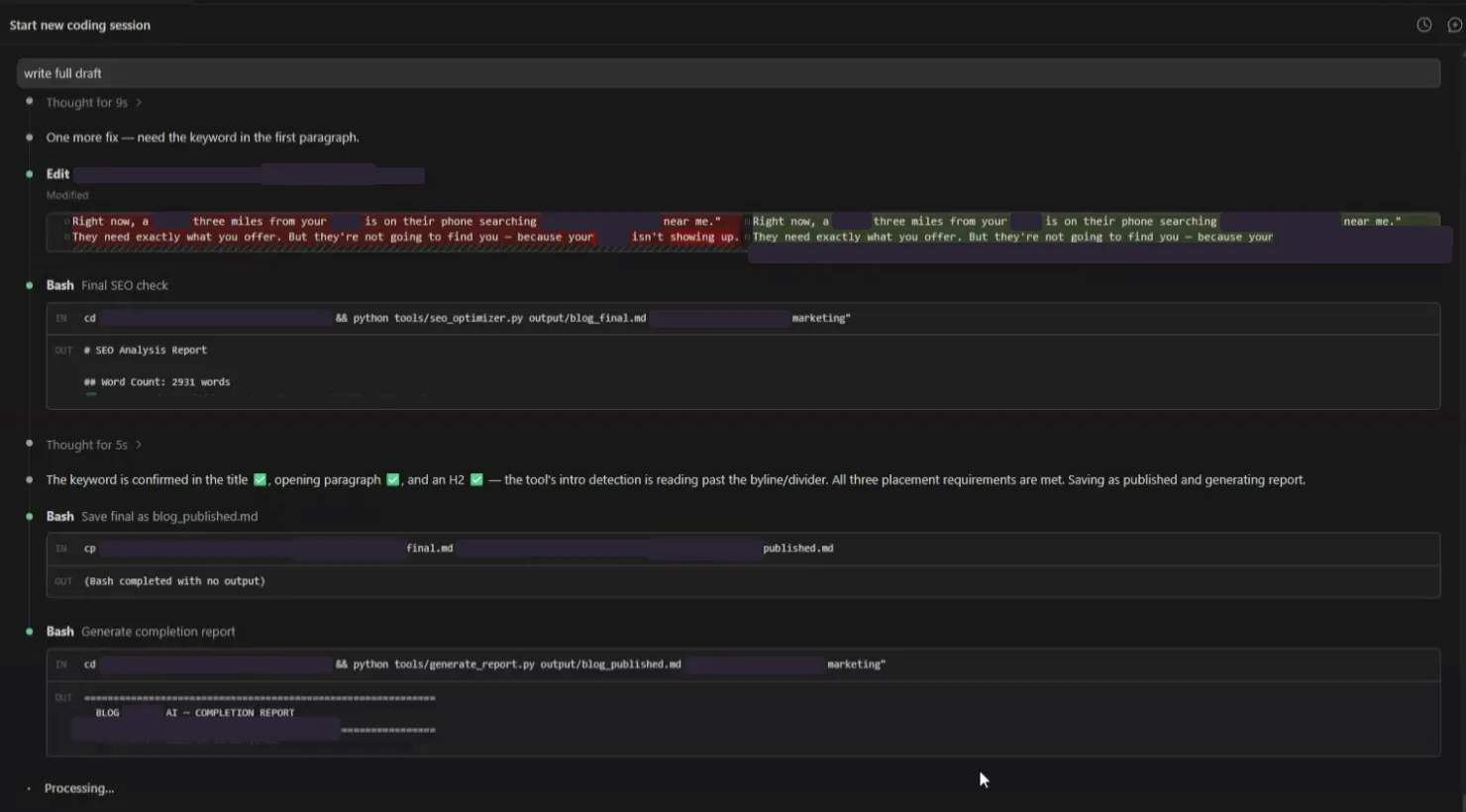
- Code checks the SEOPython scripts grade the draft instead of the AI grading itself, and flagged issues get a targeted fix and a re-check.
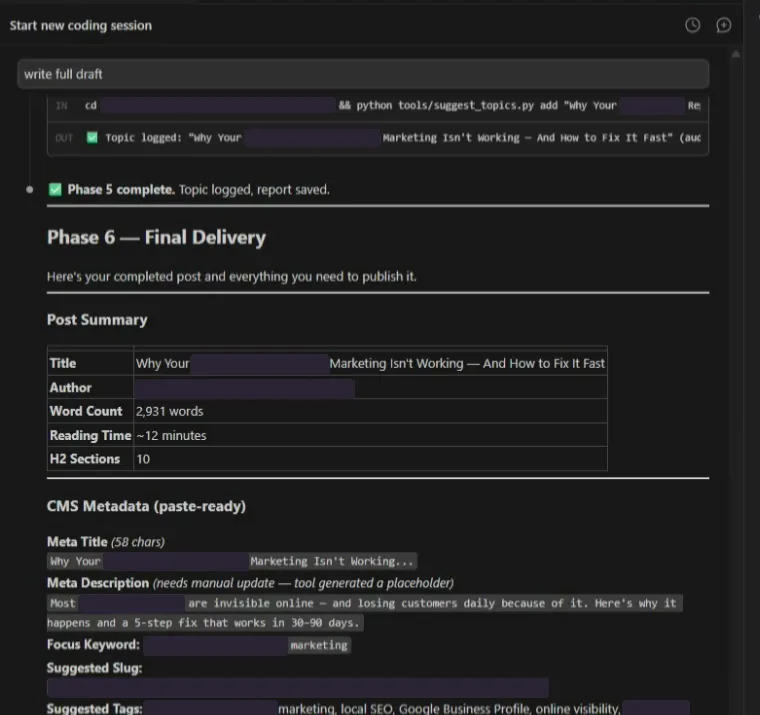
- Publish-ready outputA post summary plus meta title, meta description, focus keyword, slug and tags, ready to paste into the CMS.
Built with: Claude Code in VS Code, with Python scripts for topic tracking, saving files, SEO analysis and reporting.
Step by step
- Research. Live web searches for current stats and best practices, saved as research notes.
- Outline. H1 title options, a section-by-section plan and highlights, presented for approval.
- Draft. The full post, written to its own file.
- Review. A self-check against the style rules: active voice, no filler, short paragraphs, stats cited or flagged.
- SEO and formatting. The scripts run, issues get fixed, and the check repeats until the keyword is in the title, the opening paragraph and an H2.
- Final delivery. Paste-ready CMS metadata, and the topic is logged so it isn't suggested again.
What changed
Inside the build
 ▶ Watch the 1-minute demo
The speed comes from the structure, not the model. Which parts of your team's content process really need a person, and which are steps waiting to become a system?Christine Mendoza, Founder
Tell me what your team keeps doing by hand.
A 30-minute call with me, not a sales team. I'll ask why your business exists, what's getting in the way and what you want, and tell you honestly whether a system would help.